This article was for a final project in a Data Storytelling class at the University of Kansas. Its purpose is to display my skills in data analytics, data visualization, finding data insights, and writing to create a data story.
The Kansas City Royals have been struggling with attendance issues at their home games. When attending a Royals game, you can practically count the fans that are in attendance each game. Why is this the case, especially when other Kansas City professional sports team has great attendance numbers? The easy answer is their poor performance. That is a factor, but it’s not the full story. This is important, especially with the Royals planning a move to downtown Kansas City. There are a few insights throughout this article that provide context to the issue.
The first insight shows that building a new park does not necessarily draw a larger or sustainable crowd. In fact, some teams have seen a decrease in attendance following the opening of a new stadium. This suggests that the Royals should be cautious about planning a new downtown ball park and should consider other factors that may impact attendance.
The second insight suggests that the distance of the stadium from the downtown area does not have a clear correlation with attendance. In fact, teams with stadiums that are farther away may have higher attendance. This information should be taken into account when considering the Royals’ potential move to a downtown location.
Finally, the third insight highlights the correlation between attendance and performance. The Royals’ attendance saw a significant increase during the years they went to and won the World Series, but it has since dropped off. This raises the question of what other teams with similar performance are doing to draw fans to the stadium. These insights provide important context for the Royals’ attendance issues and should be considered as the team seeks to improve its fan base.
New Ballpark
The last six ball parks built were for the Braves, Marlins, Twins, Mets, Yankees, and Rangers. However, I will be excluding the Rangers because they opened in 2020 during the COVID-19 pandemic. These ballparks either saw an increase in attendance the year they opened the new stadium, or they saw a decrease when opening a new stadium. From here, there was either a steady decrease in attendance the years following, or a slight increase in attendance in the following years.
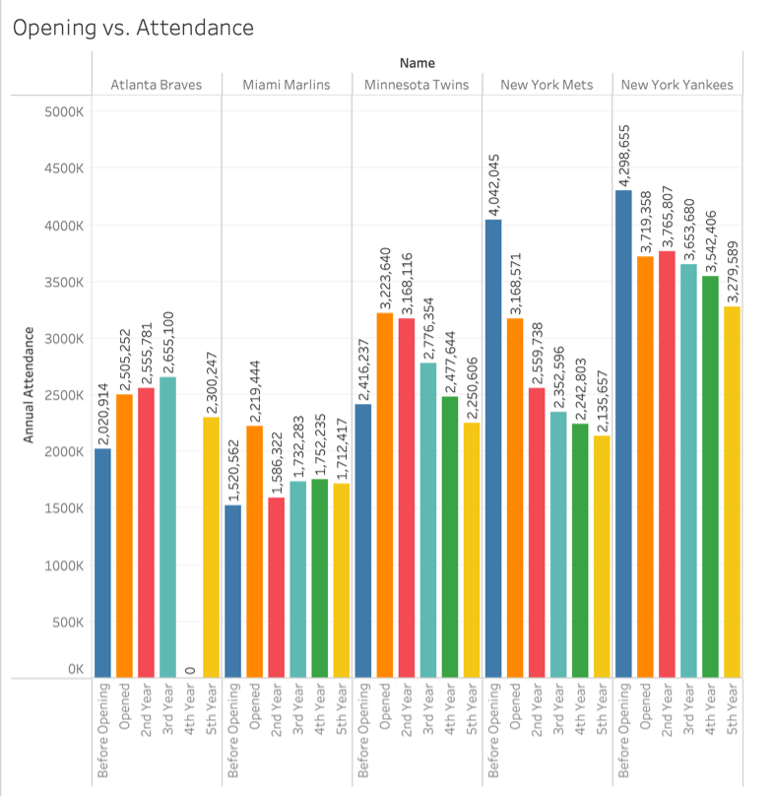
Only three teams saw an increase of attendance they year their stadium opened: Braves, Marlins, and Twins. The Marlins had the biggest percent change with 45.96%. Then the Twins with 33.42%. Lastly the Braves with 23.97%. The Mets and the Yankees — both of their stadiums opened in 2009 — saw a decrease in attendance the year they opened. The following years also saw a decrease for both teams. The Mets saw a decrease of 23.61% and the Yankees saw a decrease of 13.48%. This insight shows that a new park either doesn’t draw a larger crowd, or it doesn’t draw a sustainable crowd.
Downtown Ballpark
As mentioned earlier, the Kansas City Royals are planning a possible move to downtown Kansas City. Currently, Kauffman stadium is a few miles outside of the city center. The hope for the new stadium — specifically a downtown stadium — is to bring more fans to home games. When it comes to downtown stadiums, there was no clear correlation when it comes to attendance numbers and the proximity of the stadium to the downtown center.
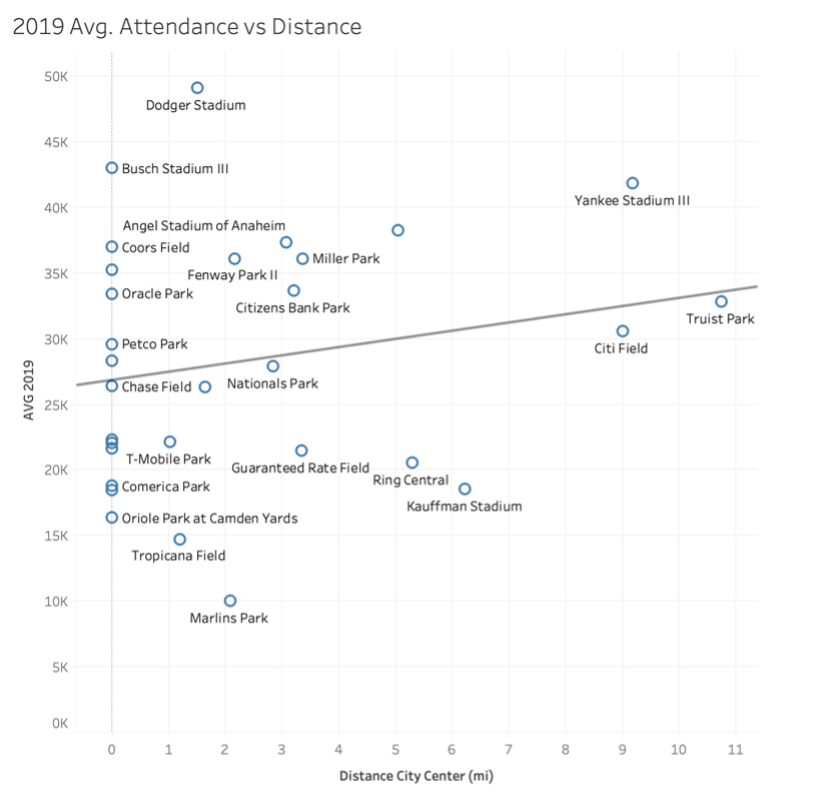
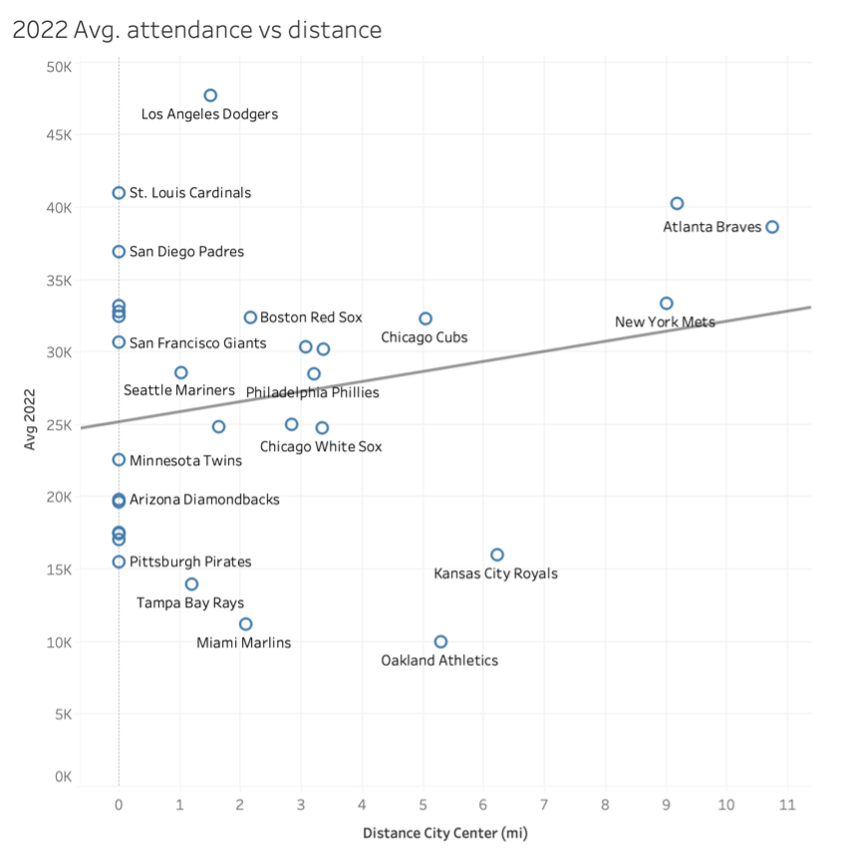
Though where the teams land on the chart is different, the trend line is the same. In fact, it suggests teams with stadiums that are farther have higher attendance. This insight — even with the first one — suggests a downtown stadium doesn’t have an impactful effect on attendance.
Performance
Analyzing the correlation between attendance and performance reveals intriguing insights. On the surface, it seems logical that teams with a higher winning percentage would have a larger average game attendance. However, the reality is more nuanced. While many teams align with this trend, there are notable exceptions that demand attention.
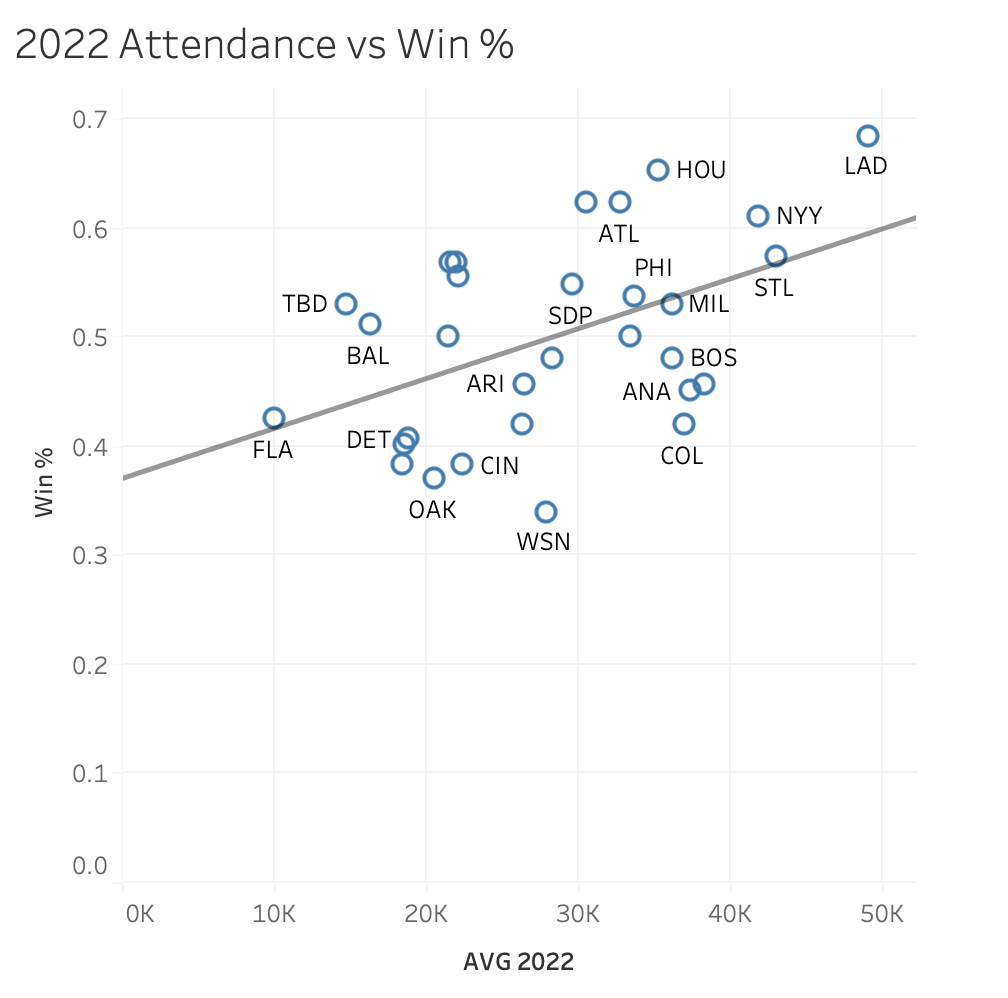
The Los Angeles Dodgers, for instance, have consistently maintained high attendance figures despite variations in their on-field performance. This suggests that factors beyond wins and losses contribute to their sustained fan engagement. The Dodgers have cultivated a devoted and passionate fan base over the years, aided by their rich history, star players, and a deep connection to the vibrant city of Los Angeles. This demonstrates that a strong fan base can endure and thrive regardless of temporary fluctuations in team performance.
Turning our attention to the Kansas City Royals, we find an intriguing case study. In 2014 and 2015, the Royals reached the World Series, ultimately winning the championship in 2015. Unsurprisingly, these successful seasons saw a surge in average game attendance, with figures hovering around the capacity of the stadium. Fans were ecstatic about their team’s triumphs and flocked to witness the Royals’ journey.
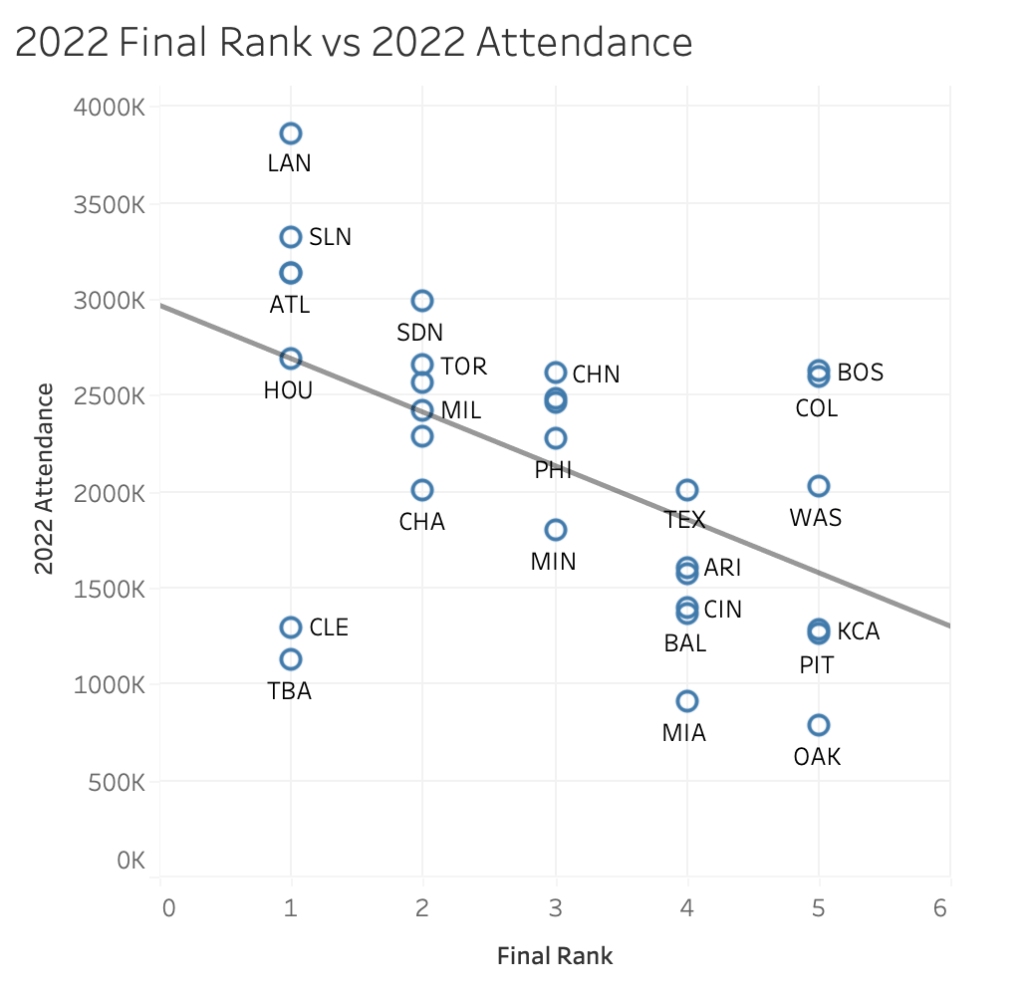
However, in the subsequent years, the average attendance experienced a slight drop-off. This can be attributed to the natural decline that often follows the peak of success, as fans may struggle to sustain the same level of excitement and anticipation. It is not uncommon for supporters to hold onto fond memories of a once victorious team, leading to a gradual decline in attendance.
In conclusion, these insights collectively indicate that the factors influencing attendance in Major League Baseball are multifaceted and complex. Merely building a new stadium or having a downtown location does not guarantee sustained or increased attendance. Instead, team performance and the ability to consistently engage and captivate fans appear to play crucial roles in drawing larger crowds to ballparks. Further research and analysis in to fan experience inside the ballpark would be valuable in exploring the strategies employed by successful teams in maintaining higher attendance figures despite similar performance levels.
 Ethan Enderle's Portfolio
One thought on “Where are the Fans? — A Dive Into the Kansas City Royals Attendance Problem”