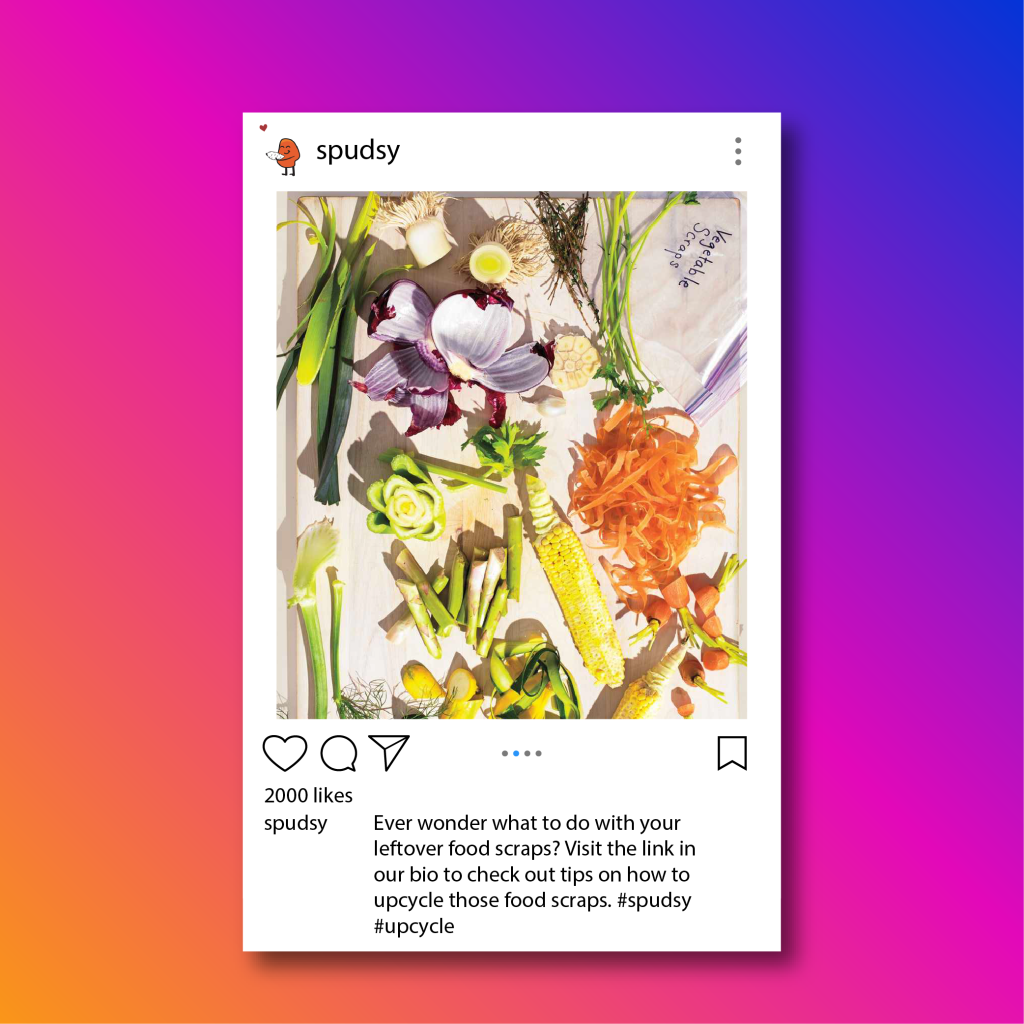
This was for my Message Development in Digital Marketing course. We were to write a blog post, along with two social media posts to promote it. You can view the Adobe Spark page of the post here. It is also below.
Tips for a Zero Food-Waste Household
Tips for Upcycling Food Scraps and Leftovers
After a week of dinner and cooking, food scraps seem to outnumber the leftovers. Instead of throwing them out or keeping them until you throw them out, upcycle them!
It’s not just about being eco-conscious (though that’s a huge plus); it’s also about getting creative in the kitchen and making the most out of every ingredient. So, grab your aprons and let’s dive into the wonderful world of upcycling!
Firstly, let’s talk about why upcycling food scraps is so important. Not only does it reduce waste and lessen our environmental impact, but it also saves money and can add delicious flavors to your dishes. Plus, it’s incredibly satisfying to transform something that might have ended up in the trash into a culinary masterpiece.
Now, you might be wondering, “Where do I even start?” I’ve got some tips to help you get started on your upcycling journey. One of my favorite tricks is to save vegetable scraps like onion skins, carrot peels, and celery tops to make homemade vegetable broth. It’s a fantastic way to add depth of flavor to soups, stews, and risottos, and it couldn’t be easier to make.
Another great way to upcycle food scraps is by turning stale bread into delicious homemade croutons or breadcrumbs. Simply toss your stale bread with some olive oil, herbs, and spices, then bake until golden and crispy. Voila! You’ve got the perfect crunchy topping for salads or soups, or a flavorful coating for chicken or fish.
Lastly, did you know that you can use citrus peels to make your own natural cleaning products? Simply steep orange or lemon peels in white vinegar for a few weeks, then strain and transfer to a spray bottle. It’s a cheap, eco-friendly alternative to store-bought cleaners, and it’ll leave your home smelling fresh and citrusy.
Now, I know what you’re thinking: “This all sounds great, but what about those fruit and vegetable scraps that can’t be eaten or repurposed?” You can still put them to good use by starting a compost pile. Not only will you be diverting waste from the landfill, but you’ll also be creating nutrient-rich soil for your garden or houseplants.
So there you have it, folks. Upcycling food scraps is not only good for the planet, but it’s also a fun and rewarding way to get creative in the kitchen. So the next time you’re about to toss those carrot tops or banana peels in the trash, think twice and see if you can give them a second life instead. Your taste buds—and the planet—will thank you for it.
Social Media Posts
 Ethan Enderle's Portfolio